
Sony has made some very successful soundbars over the years, but its latest home cinema solution moves away from the all-in-one Atmos speaker in favour of a multi-speaker setup.
Take a look at the Sony HT-A9 Home Theater System, and you’ll see four wireless speakers and a control box that hooks up to your TV’s HDMI port. What you can’t see, however, are 12 ‘phantom’ speakers, that the system builds using a mixture of upfiring tweeters, psychoacoustic techniques, and sound optimization.
This is intended to create a dome of sound with Dolby Atmos and DTS:X content, making you feel as though you’re in the heart of the action while watching your favorite films.
But, how successful can an array of make-believe speakers really be? We spent a little time getting to know the HT-A9 Home Theater System ahead of our full review - and so far, we like what we hear.
Sony HT-A9 Home Theater System price and release date
As you may have guessed, all that audio tech doesn’t come cheap. The HT-A9 Home Theater System costs $1,799.99 / £1,599 / AU$2,499 and is available to preorder now in the US and the UK. Availability in Australia is yet to be confirmed.
That’s pricier than the best soundbar you can buy in 2021, the Sonos Arc - though you are getting multiple speakers and a control box for your money.
Design
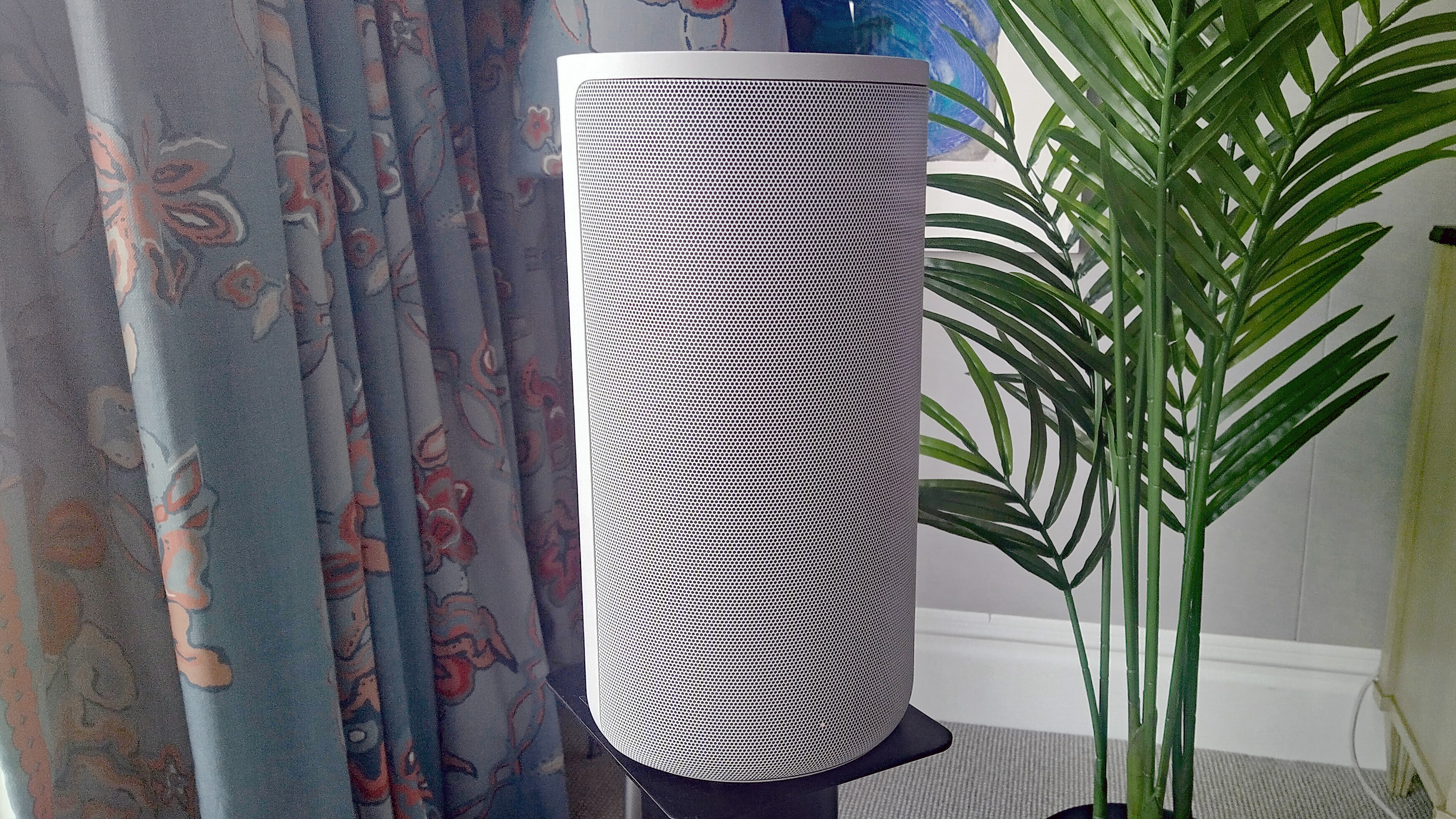
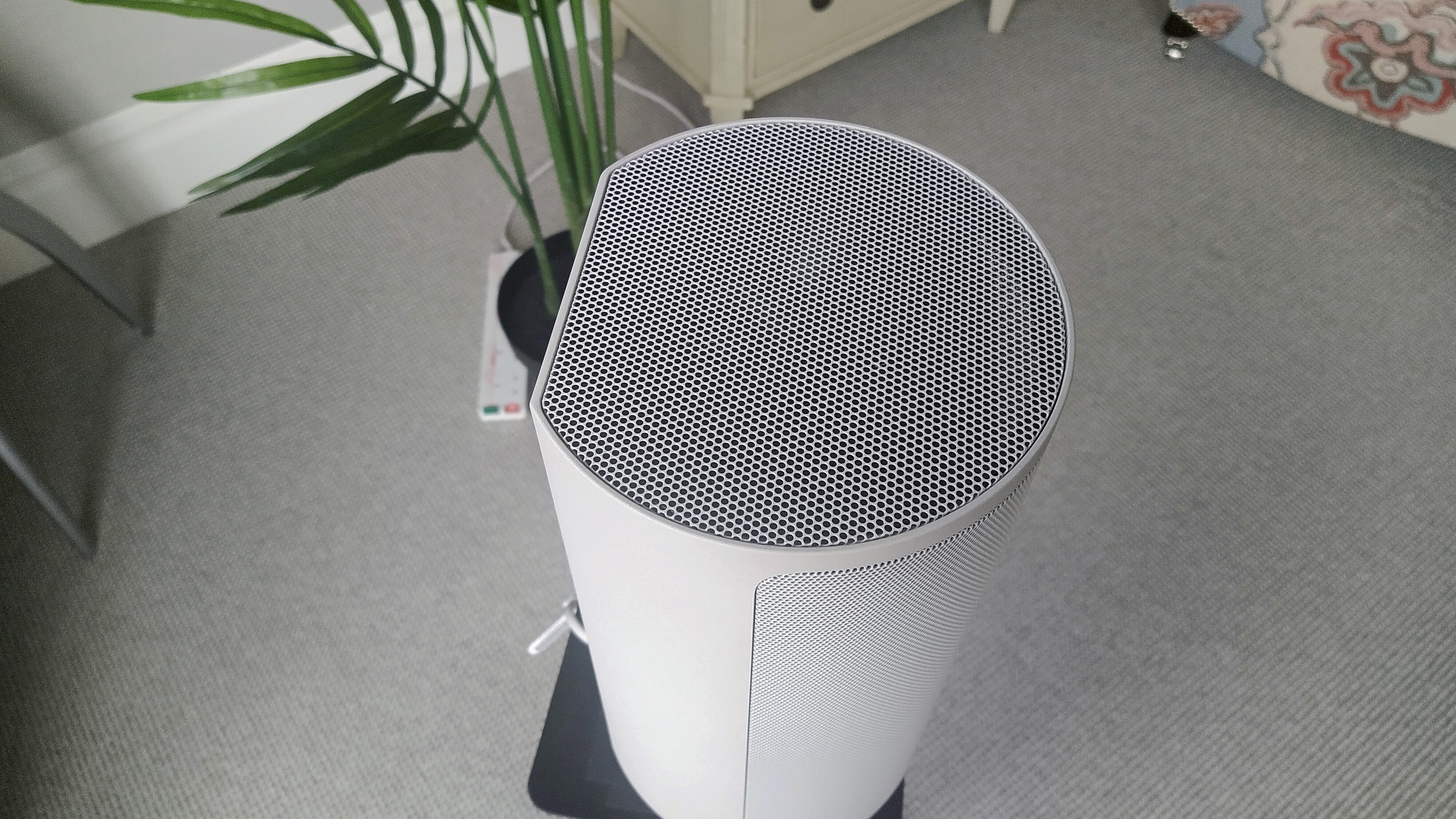
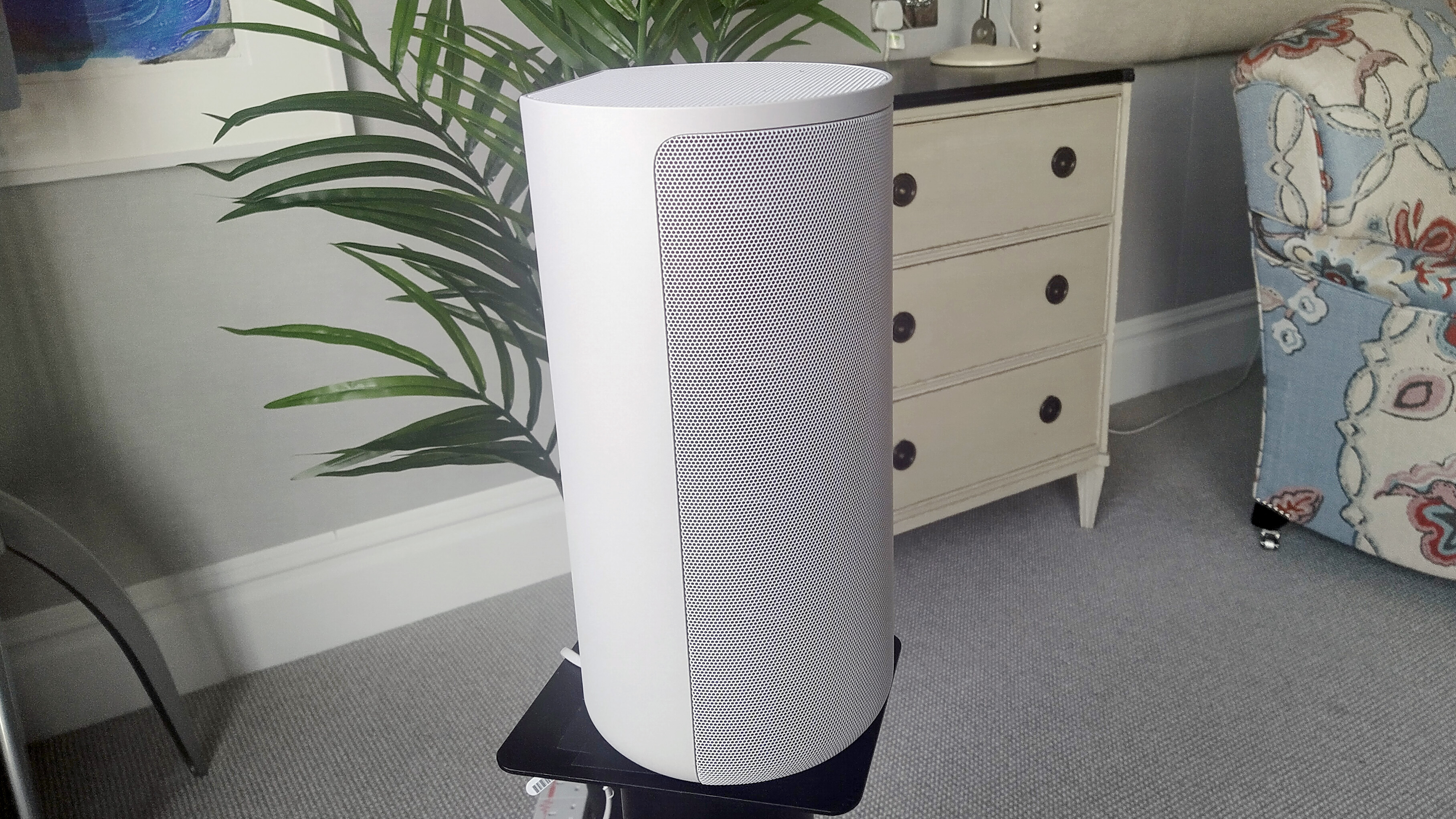
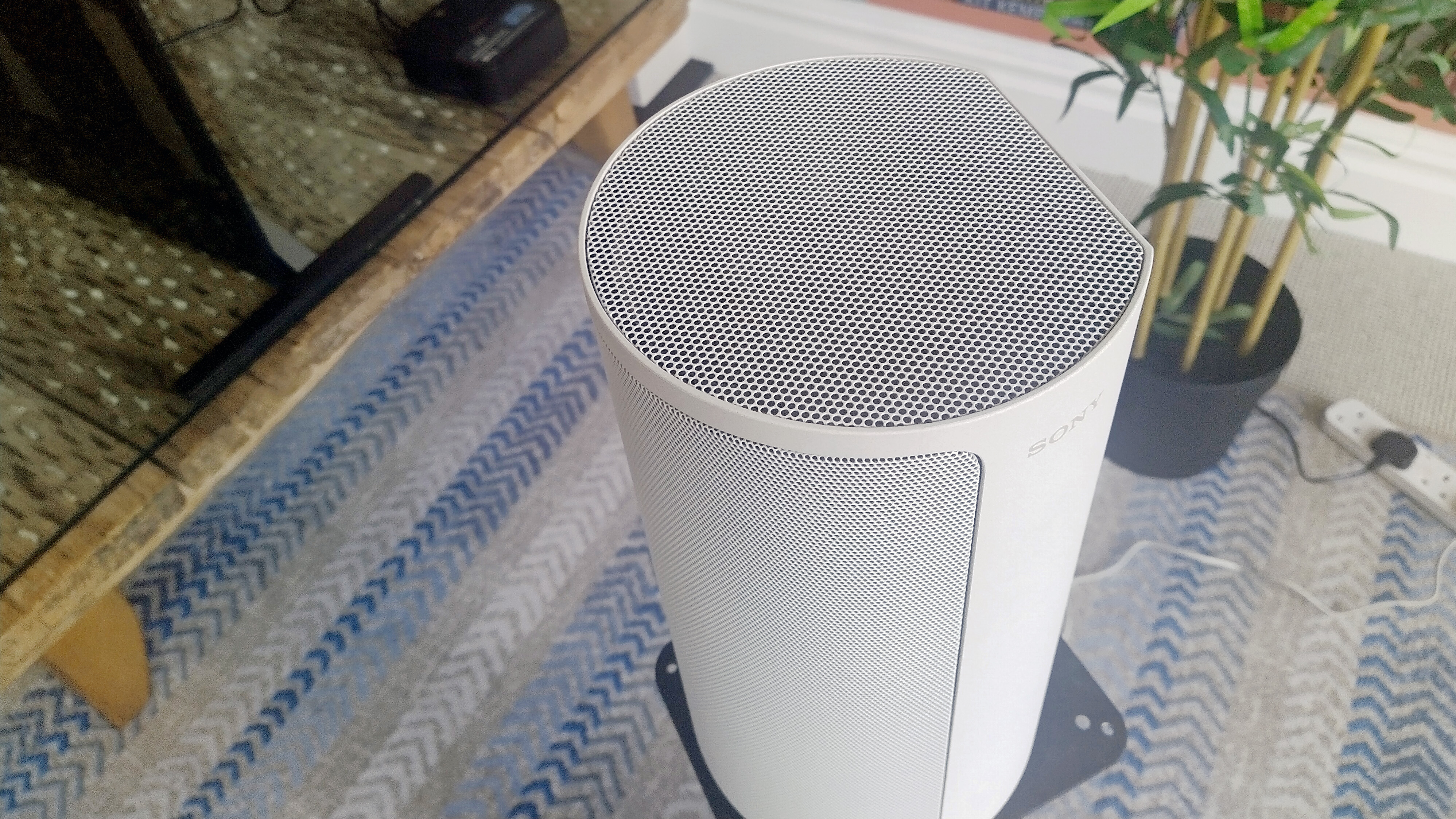
The Sony HT-A9 Home Theater System is made up of four wireless speakers and a control box that plugs into your TV’s HDMI port, with two speakers on either side of your screen, and two behind you on your left and right. While the speakers - which come with gray fabric grilles - connect to each other and the control box wirelessly, they do all need to be plugged into an outlet.
The clever thing about this setup is that the speakers don’t need to be oriented at exactly the same height or even equidistant from one another - the Sound Field Optimization technology will measure the position of each speaker, ensuring the sound is tailored to your room and where they’re placed in relation to each other. Handy if you don’t want to shell out for speaker stands and would like to use, say, a tall bookshelf to house your left rear speaker and a coffee table for the right rear speaker.
Setting up the Home Theater System seems to be pretty simple based on the demo we watched. Once all the speakers are in place, you simply press start on your TV, and the Sound Field Optimization technology will do its thing, with each speaker playing a series of bleeps to determine their position in relation to the ceiling, your TV, and each other. Unlike other sound optimization technologies, the speakers aren’t particularly interested in the size of your room - the system creates its own virtual dome of sound within the invisible boundaries it sets.
This takes all of one minute - and you now have a home cinema system that comprises four real life speakers, and 12 ‘phantom speakers’, allowing for Sony’s 360 Spatial Sound Mapping. You can also adjust this positioning if your TV isn’t situated perfectly in the center of the left and right front speakers.
Audio performance
While we didn’t get to spend a long time with the Sony HT-A9 Home Theater System, we did have the chance to hear it play through a couple of Dolby Atmos demos.
First, we watched a scene from a rainforest. Thanks to the array of phantom speakers and upfiring tweeters, it sounded as though birds were flapping above our head, while raindrops sounded as though they were falling all around us. Rumbles of thunder sounded powerful and bass-heavy, with the phantom subwoofer almost seeming to rise up from the floor beneath our feet - an impressive achievement considering there are just four physical speakers at work here.
As audio pans around the soundstage, it never felt as though the sound is being passed from one speaker to another; the effect is far more natural than you might imagine.
It was the same story as we watched a clip from the 2014 WWII flick Unbroken. Planes flying overhead on screen made us flinch as if to duck our head, while explosions appeared to come at us from all angles. Planes flying low on the screen were even more impressive, with the Home Theater System giving the sense - sonically, at least - that they were really soaring beneath our feet.
The dialogue sounded clear in spite of all this action, with lots of detail in the clicks and clacks of plane controls being switched on and off by the actors on the screen. Music also sounds good, with plenty of clarity, a rich tone, and powerful bass - and, if you want even more bass, you can add in an additional physical subwoofer.
Overall, the effect created by the phantom speakers is nothing short of extraordinary - and that’s not a word we use lightly when it comes to ‘virtual’ surround sound solutions. While many are good, few are as convincing as this, and that’s likely down to a heady combination of actual upfiring tweeters that can bounce sound off the ceiling and back down to ears, and clever signal processing that makes you feel like you’re enveloped in a dome of sound.
Connectivity
The control box that comes with the HT-A9 Home Theater System boast quite a few connection options, including LAN, HDMI in, and HDMI out (eARC with 4K passthrough).
In terms of wireless connectivity, you have Spotify Connect, AirPlay 2, Chromecast built-in, and Bluetooth, with support for AAC, SBC, and Sony’s own LDAC codec. There’s also support for DSEE Extreme, which we first saw in the Sony WH-1000XM4; this tech upscales compressed digital music files in real time, helping you to eke out more detail from your favorite tracks.
The system works with Google Assistant and Alexa; as long as you have a compatible smart speaker, you can give either voice assistant commands and control your music playback hands-free.
Unsurprisingly, Sony thinks the HT-A9 will work best with Sony Bravia TVs, thanks to its support for Acoustic Center Sync, which should ensure that what you’re hearing and what you’re seeing on screen matches up perfectly.
Early verdict
While we haven’t spent enough time with the Sony HT-A9 Home Theater System to give a definitive verdict, what we’ve seen (and heard) so far is very impressive indeed.
Its ingenious combination of upfiring tweeters, psychoacoustic techniques, and sound optimization creates a very convincing dome of sound, which is perfect for watching immersive films. By virtue of its audio upscaling features and support for 360 Reality Audio, music sounds great, too.
Whether home cinema enthusiasts will want to shell out on four speakers which, even if they are wireless, are still fairly cumbersome, as opposed to a standalone soundbar remains to be seen. Saying that, the HT-A9 Home Theater System could be a great alternative to anyone who remains unconvinced by the spatial audio tech afforded by today’s soundbars.
- Prefer a soundbar? Read our Sonos Arc review
from TechRadar - All the latest technology news https://ift.tt/3lQslJc

No comments:
Post a Comment